

Cold Weather and Stiff Joints in Dogs and Cats
Cold Weather and Stiff Joints: How to Help Your Dog or Cat This Winter
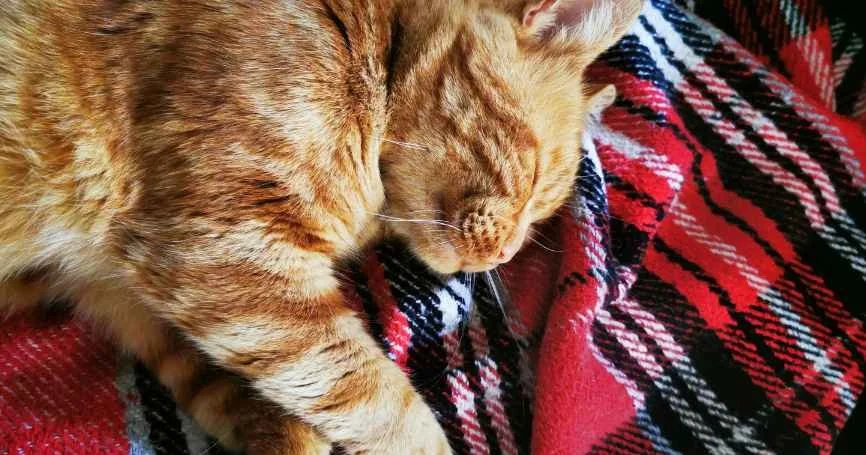
Does cold weather make arthritis worse for pets?
Quick answer: It can. The American Veterinary Medical Association (AVMA) says cold weather may make some health problems worse, and arthritis is one of them. Older pets and pets with arthritis also have a harder time on snow and ice, so they slip and fall more often. A warm bed, safe footing, shorter walks, a healthy weight, and a vet plan that pairs conventional pain care with therapies like acupuncture, laser therapy, and rehab can help your pet stay comfortable all winter.
You might notice it on the first frosty morning. Your dog takes a long time to climb off her bed. Your cat, who used to land on the counter in one smooth leap, now looks up at it, thinks it over, and walks away. A lot of pet parents call this "just getting old." Very often, sore joints are part of the story.
Arthritis (the medical name is osteoarthritis, or OA) is the most common cause of long-lasting pain in dogs and cats. The 2022 AAHA Pain Management Guidelines report that it may affect close to 40% of dogs and more than half of cats. The same guidelines say most cats over 10 years old show signs of arthritis pain. That is a lot of quiet hurting, and long Chicago-area winters give those joints plenty to grumble about.
Signs your dog or cat has stiff, sore joints
Pets rarely cry out from arthritis. They change how they move instead. The AAHA guidelines note that pet parents often spot these small changes but wait months to act, because the changes creep in slowly. If something seems a little off, it's worth mentioning at your next visit.
In dogs, watch for:
Taking a long time to stand up or lie down
Shifting weight off one leg while standing
Pausing before stairs, the car, or the couch
Shorter walks, or lagging behind on the way home
Restless nights, pacing, or trouble settling down to sleep
Licking one joint over and over
Pulling away when you touch a hip, knee, or back
In cats, watch for:
AAHA lists six everyday moves that can show joint pain in cats: running, jumping up, jumping down, going up stairs, going down stairs, and chasing toys. If your cat skips any of these, take note. Other clues include giving up a favorite high perch, hiding more, acting grumpy when picked up, or struggling to step into a high-sided litter box.
Cats are experts at hiding pain. AAHA points out that the most telling signs show up at home, not in the exam room. That makes you the most important member of your cat's care team.
Try this: Take a short phone video of your pet getting up from bed, using the stairs, or hopping off the couch. Bring it to your appointment. AAHA recommends home videos because many pets move differently at the clinic than they do in the living room.
9 ways to ease stiff joints at home this winter
Small changes around the house can make a big difference for a pet with sore joints. Most of these cost little or nothing.
Offer a warm, padded bed. A thick, dry bed that sits a bit off cold floors helps hold in warmth. The AVMA also suggests giving pets more than one cozy spot, so they can move to a warmer or cooler place as they need.
Fix slippery floors. Hardwood and tile are tough on wobbly legs. AAHA recommends rugs or carpet runners so pets have secure footing.
Add ramps or steps. A ramp to the couch, bed, or car saves a lot of painful jumping. For cats, steps up to a favorite window perch matter, because AAHA notes that high places help cats feel safe. A litter box with a low side is easier to step into, too.
Keep them moving, in smaller doses. The AVMA says you may need to shorten walks in very cold weather. Movement still matters, though. AAHA reports that daily walking has been linked to less limping in dogs with hip problems. Several short walks may be easier on achy joints than one long trek through the cold.
Steer clear of ice. The AVMA warns that older pets and pets with arthritis are more likely to slip and fall on snow and ice. Stick to cleared paths when you can, and stay off frozen ponds and lakes.
Check paws and wipe them down. De-icers and antifreeze can make pets sick if they lick them off their fur. The AVMA recommends wiping your dog's feet, legs, and belly after every winter walk. A sudden limp mid-walk can also be ice packed between the toes. Trimming the fur between the toes helps, and booties work well if they fit right.
Bundle up short-coated pets. A sweater or coat helps pets who feel the cold fast. Keep a dry one ready each time, since the AVMA notes a wet coat can make a dog colder.
Keep weight in a healthy range. Some pet parents think a few extra pounds keep pets warm. The AVMA says the health risks of extra weight outweigh any benefit. AAHA adds that staying lean helps slow arthritis over time. Every extra pound is one more pound those joints have to carry.
Use heat with care. Pets with sore joints love warm spots. The AVMA cautions that space heaters can burn pets or tip over, and heated pet mats can still cause burns. Keep heaters out of reach and check mats often.
How integrative care helps pets with arthritis
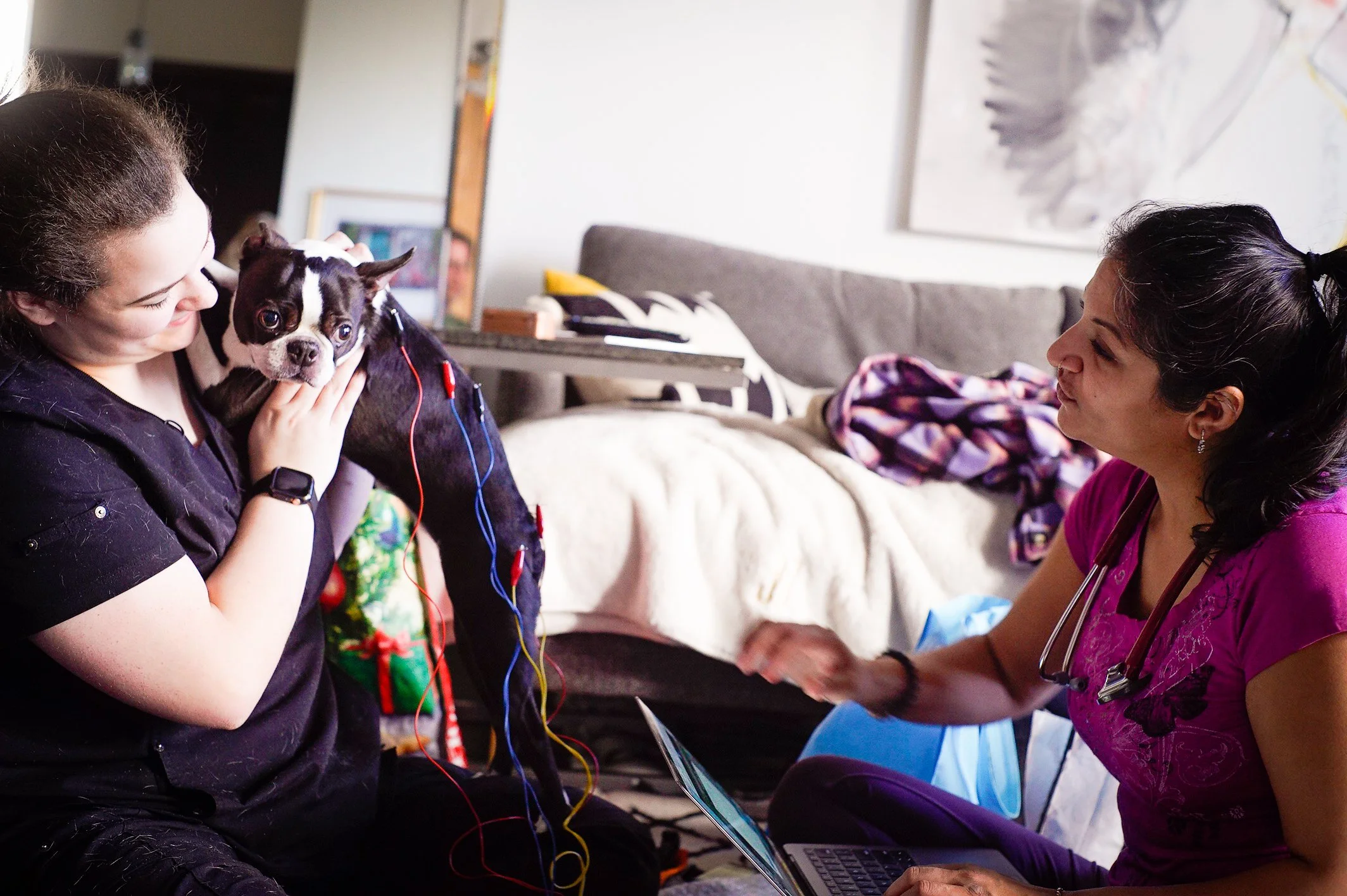
The best arthritis plans use more than one tool. AAHA calls this a multimodal approach. Its 2022 guidelines put prescription pain relief, omega-3 fatty acids, a healthy weight, regular activity, and home changes at the top of the list. The 2023 AAHA Senior Care Guidelines go further. They say pain and mobility care for older pets must be integrative and multimodal, and they name acupuncture, rehabilitation, and laser therapy among the options.
At Bhatt Integrative Veterinary Specialty in Glenview, Dr. Priya Bhatt brings over 16 years of veterinary practice to building that kind of plan. Conventional medicine and integrative therapies work side by side. Here is what that can look like.
Acupuncture and electroacupuncture
Acupuncture uses very thin, sterile needles placed at specific points on the body. Electroacupuncture adds a gentle electrical current through some of those needles. Dr. Bhatt is a Certified Veterinary Acupuncturist (CVA) trained through the Chi Institute. Chi University teaches that traditional Chinese veterinary medicine (TCVM) should go hand in hand with conventional veterinary care.
What does the research say? A 2022 review in Veterinary Clinics of North America found growing evidence for acupuncture as part of a multimodal plan for dogs with arthritis. AAHA's 2022 guidelines are more cautious and call for more research. We think pet parents deserve to hear both.
In TCVM, arthritis is described as a type of Bi syndrome, and some forms are tied to Cold and Damp (AJTCVM, 2021). That is one reason a TCVM exam looks at the whole pet, not only the sore joint.
Laser therapy (photobiomodulation)
Laser therapy uses focused light to support healing tissue and ease pain, with no needles involved. Two small but well-designed studies are encouraging. In a 2018 trial of 20 dogs with elbow arthritis, dogs that got laser therapy for six weeks walked better and had lower pain scores than dogs given a sham treatment. Nine of the 11 treated dogs also needed less pain medication, while none of the sham group did. A 2022 trial in 20 dogs with hip arthritis found laser therapy lowered pain and improved function in the first month.
For cats, AAHA notes laser therapy can be a well-tolerated choice, but repeated car rides stress many cats. A good plan weighs both.
Rehabilitation and therapeutic exercise
AAHA's guidelines say rehabilitation should be part of the plan for any pet living with long-term pain. Rehab can include stretching, range-of-motion work, massage, water-based exercise, and targeted strength moves. BIVS partners with Dr. Alexander Vercellone, PT, DPT, CCRT, of The K9PT, a certified canine rehabilitation specialist. Many exercises can be adapted for home, so progress continues between visits.
Massage and tui-na
Tui-na is a hands-on TCVM massage that works on acupuncture points and gently stretches stiff limbs. In a 2021 randomized trial of 47 dogs with arthritis, dogs that got weekly tui-na for five weeks, on top of their usual medication, had less pain, better range of motion, and better quality of life than dogs on medication alone. No side effects were reported. Owners in that study knew which group their dog was in, so more research will help. Our practice manager, Weronika Shore, is a certified canine massage therapist. Learn more about animal massage therapy at BIVS.
Regenerative options
For some dogs, Dr. Bhatt may also talk about regenerative medicine, such as platelet-rich plasma (PRP). AAHA describes the evidence for joint injections like these as still emerging, so this is a conversation to have one pet at a time.
It starts with a full picture
Before building any pain plan, especially for a senior pet, bloodwork shows us how the body is handling things. Our in-house analyzer runs a CBC and chemistry panel in about 20 minutes, so we can often talk through results during the same visit.
When to call your vet right away
Stiff joints usually build slowly. Some changes can't wait, though. Call us, or an emergency hospital after hours, if your pet:
Won't put any weight on a leg
Cries out when touched or can't get up
Starts limping suddenly (check for ice between the toes first, as the AVMA suggests)
Shivers, whines, seems weak, slows down, or looks for a warm place to burrow. The AVMA lists these as signs of hypothermia, so bring your pet inside and call your vet.
One more important note: never reach into your own medicine cabinet. University of Illinois veterinary pharmacists warn that human pain relievers are among the most toxic medicines for dogs and cats. Only give pain medicine your veterinarian prescribes.
Current BIVS patients can reach after-hours virtual triage through VetTriage.
Frequently asked questions
Does cold weather really make arthritis worse in dogs? It can. The AVMA says cold weather may worsen conditions like arthritis, and that older and arthritic dogs are more likely to slip on snow and ice. Warm bedding, good traction, and shorter, more frequent walks can help.
How can I tell if my cat has arthritis? Watch how your cat runs, jumps up, jumps down, uses stairs, and chases toys. AAHA uses these six moves to screen for joint pain in cats. Skipping high perches, hiding more, or getting grumpy when handled can also be signs.
Can I give my dog or cat human pain medicine? No. Human pain relievers are among the most toxic medicines for pets. Only use pain medicine your veterinarian prescribes for your pet.
Do joint supplements help pets with arthritis? AAHA's 2022 guidelines found the strongest evidence for omega-3 fatty acids. Most other joint supplements have little proof behind them. Ask your vet before adding anything new.
Should I still walk my arthritic dog in winter? Yes, in most cases. Gentle, regular movement helps joints. The AVMA suggests shorter walks in very cold weather, so try a few short outings on cleared paths instead of one long one.
Can cats have acupuncture or laser therapy? Yes. AAHA's guidelines describe laser therapy as a well-tolerated option for many cats and note that acupuncture has been studied in cats too. Dr. Bhatt shapes each plan around your cat's comfort, including how well they handle car rides.
Help your pet move comfortably this winter
If your dog or cat seems stiff, slow, or just not quite themselves when the temperature drops, we'd love to help. Bhatt Integrative Veterinary Specialty in Glenview, IL, welcomes pet parents from across the Chicago area. Dr. Priya Bhatt will look at your whole pet and build a plan that blends conventional medicine with therapies like acupuncture, laser therapy, rehab, and massage.